
15 Demographics of People Who Might Dream of the Dream Symbol: Threshold Between Sleep and Waking
Want a Personalized Dream Interpretation?
Curious about how people like you interpret this dream symbol? Explore personalized interpretations tailored to your demographic. Get personalized insights for free!
Get Free Interpretation Now →Table of Contents
1. Adults Experiencing Hypnagogic Dreams
For adults experiencing hypnagogic dreams, the threshold between sleep and waking holds a mysterious and captivating significance. This liminal space, that fragile moment teetering on the edge of consciousness, often manifests in vivid, fleeting images and sensations. It’s neither fully dream nor fully awake—a striking in-between zone.
In this delicate state, the mind begins to release the constraints of the waking world. Logical thinking blurs. Boundaries dissolve. Adults in this phase might encounter peculiar dream symbols—doorways, corridors, bridges—that symbolize crossing from one reality into another. These symbols are not random. They represent transition, transformation, and the fascinating ambiguity of consciousness itself.
Why does this threshold appear so prominently in hypnagogic dreams? Because hypnagogia is fundamentally about crossing lines. It’s where our brains quietly shift gears, teasing us with fragments of memories, emotions, or fears that surface without full explanation. Adults often report feeling both wonder and unease—caught in a mental landscape that is at once familiar and strange.
This dream symbol—the “threshold”—invites deep reflection. It asks: What are we leaving behind as we drift off? What do we carry forward into waking life? For many adults, these moments demand attention. They reveal hidden anxieties or creative insights lurking beneath the surface of daily routine.
The threshold is not just a simple passage. It's a powerful metaphor for personal change, growth, or even awakening. In hypnagogic dreams, adults glimpse the profound mystery of human consciousness—poised forever between two worlds, waiting to cross.
2. Children in Early Cognitive Development
Children in early cognitive development often experience dreams that hover at the fragile boundary between sleep and waking. This threshold is a mysterious liminal space where reality and imagination blur. For these young dreamers, it’s not just a passage but a playground of discovery.
Their minds are rapidly expanding, absorbing new ideas and sensations every day. When they dream about this threshold, they reveal a lot about their emerging understanding of the world.
At this stage, children haven’t yet fully separated the realms of sleep and wakefulness. Dreams might feel almost real, sometimes confusing them. They might dream of being caught between two places—half awake, half asleep—like standing in a doorway that swings open between dreams and reality.
This dream symbol can reflect their growing awareness of transitions. Just as they learn to move from one activity to another or from dependence to independence, the dream threshold represents change and possibility.
Moreover, these dreams often contain vivid sensory details. Sounds, colors, or feelings can feel intensely real. This sensory richness echoes their early cognitive experiences, where the boundaries of what is “inside” or “outside” their mind are still forming.
Children may also express feelings of curiosity, hesitation, or even slight fear associated with this threshold. It’s a natural response to stepping into the unknown, just like learning to walk or talk.
In essence, the dream symbol of the threshold between sleep and waking for children in early cognitive development is a potent mirror of their inner world. It captures their exploration of reality, their emotional responses to new experiences, and their tentative steps into consciousness itself.
3. Teenagers with Sleep Disorders
When teenagers with sleep disorders dream about the threshold between sleep and waking, these images carry a unique weight. Imagine standing at a doorway, the space between two worlds—neither fully asleep nor fully awake. This threshold is more than just a blurry moment in the night for these teens. It represents their daily struggle with rest, consciousness, and control.
For teenagers battling sleep disorders—like insomnia or narcolepsy—this threshold scene often feels unsettling. The dream world is unstable, shifting rapidly like quicksand. They sense the pull of waking life, but their mind is trapped in the haze of sleep. This liminal space can evoke confusion, fear, or even frustration.
But why this symbol? The threshold embodies the tension they live with every day. Sleep is meant to be a refuge, yet here, it’s a barrier. The mind hovers between awareness and oblivion. It’s a place where time blurs and logic slips away.
Dreams of this liminal zone may also reveal a deep yearning for balance. Teens might subconsciously wish to cross fully into restful sleep without the interruptions caused by their disorder. Or they desire to wake with clarity, free from grogginess and disorientation.
In some cases, these threshold dreams can feel like a warning or a message. Are they being asked to pay attention to the signals their body sends? Are they grappling with anxiety or stress caused by poor sleep? The “in-between” symbol acts as a mirror to their internal struggle.
Ultimately, for teenagers with sleep disorders, dreaming of the threshold between sleep and waking is a poignant metaphor. It captures the elusive boundary they wrestle with every night—a space filled with uncertainty, hope, and a silent plea for rest that feels just out of reach.
4. Elderly Individuals and Dream Recall
Dreams that feature the symbol of a threshold between sleep and waking hold a unique resonance for elderly individuals. This demographic often inhabits a delicate balance between alertness and rest, a state that mirrors the very nature of this symbol.
For many older adults, nights may be punctuated by light sleep, brief awakenings, or vivid episodes of semi-consciousness. Their minds frequently hover in that liminal zone—neither fully asleep nor fully awake. This often leads to a heightened sensitivity to dreams centered on thresholds.
But why does this symbol emerge so strongly in their dreamscape?
Because the threshold represents more than just a physical boundary. It marks transitions: the passage from one state to another, from the known to the unknown, from unconsciousness to awareness. For elderly dreamers, these transitions take on profound significance.
The threshold may symbolize the fragile edge between memory and forgetfulness. Between lingering vitality and creeping decline. It can evoke feelings of uncertainty or hope, reflecting their daily navigation through aging.
Dream recall among older adults, though sometimes challenged by cognitive changes, often captures moments of this in-between state. Dreams with threshold imagery may present doorways, staircases, or bridges—each a metaphor for crossing over or pausing before moving forward.
This symbol invites elderly dreamers to examine their own internal shifts. To contemplate endings and beginnings, to embrace transformation. It raises questions: What is being left behind? What awaits on the other side?
In this way, the threshold in dreams is not merely a passive marker. For the elderly, it often becomes a powerful site of reflection on life’s evolving landscape—offering both mystery and insight at the cusp of sleep and waking.
5. Artists and Creative Professionals
For artists and creative professionals, the dream symbol of the threshold between sleep and waking holds a special, almost sacred significance. This liminal space is not just a blurry line—it’s a fertile ground where imagination stirs and wild ideas take root.
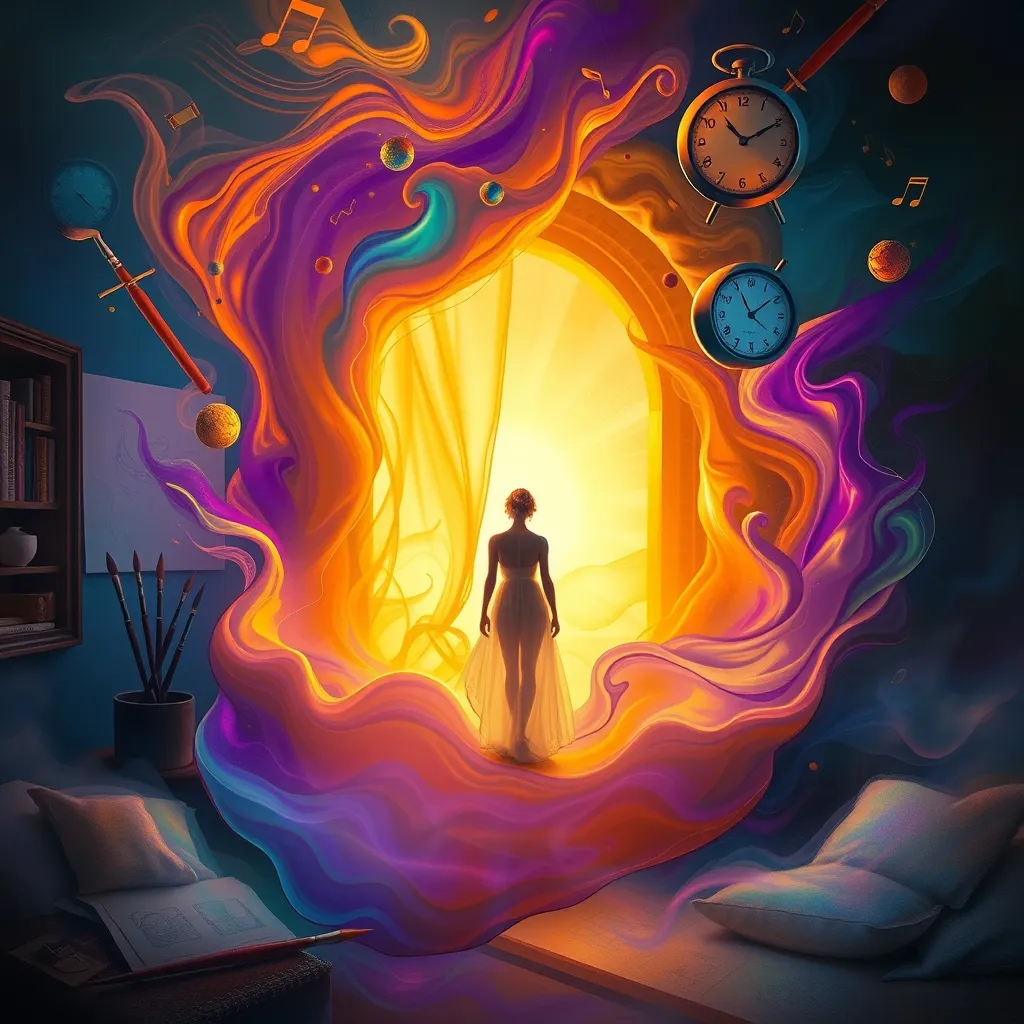
Many creatives describe this threshold as a veil or a door. It’s where the mind floats between the clarity of consciousness and the boundless realm of dreams. Here, the usual rules of logic begin to loosen. Colors may shift unpredictably. Shapes morph in vivid ways. Time bends and loops.
Why does this matter so much to artists?
Because in that fragile moment, the subconscious speaks most freely. Symbols, images, and stories arise without censorship. It’s a raw, unfiltered flow of inspiration. The creative mind often captures fragments from this threshold—snippets of dreams that later become sketches, poems, or scenes in a film.
For many, this dream symbol sparks curiosity. What secrets lie just beyond waking? What truths about oneself emerge in this suspended moment? Artists see it as a gateway—an invitation to explore their innermost thoughts and feelings before rational thought asserts control.
Moreover, this boundary challenges the creative mind to balance order and chaos. The waking world demands structure; the dream world offers liberation. Standing on this threshold lets them dance between both. It’s a reminder that creation often happens in the blend of opposites.
Dreams at the threshold might also reflect an internal state: a moment of transition, uncertainty, or anticipation in their lives or creative processes. It’s a potent metaphor for stepping into something new—whether a project, an emotion, or a shift in perspective.
In essence, for artists and creative professionals, dreaming of this threshold is much more than a fleeting image. It’s a symbolic mirror reflecting the delicate interplay between thought and intuition, discipline and spontaneity—the very essence of creativity itself.
6. Meditation Practitioners and Lucid Dreamers
For meditation practitioners and lucid dreamers, the dream symbol of the threshold between sleep and waking holds a unique and profound significance. This liminal space, where consciousness gently shifts from one state to another, is not just a passive boundary—it is a dynamic gateway teeming with potential.
Meditators often describe this threshold as a moment of heightened awareness. It is during this fragile state that the mind hovers between the shadows of sleep and the clarity of wakefulness. Here, the usual boundaries blur, allowing insights and subtle sensations to emerge. This fleeting suspension offers a rare opportunity to witness the subtle interplay between the unconscious and conscious self.
Lucid dreamers, on the other hand, see this threshold as a vital portal. It is the moment when awareness can be consciously cultivated within the dream. Recognizing and navigating this passage allows them to step into full lucidity, transforming the dreamscape into a playground of conscious exploration. The threshold becomes a symbol of potential mastery: the power to bridge two worlds seamlessly.
Both groups intuitively sense that this borderland is charged with meaning. It challenges the dreamer to question reality. Is this sleep? Or waking? Or something in between? This ambiguity stirs curiosity and invites deeper exploration.
The threshold symbolizes transition, possibility, and transformation for meditation practitioners and lucid dreamers alike. It is less a fixed point and more a fluid experience—one that invites them to awaken within the dream or deepen their meditative insight. Encountering this symbol in dreams often sparks a sense of empowerment and curiosity, encouraging continued practice and self-discovery.
In essence, the threshold between sleep and waking is where the familiar dissolves, and new awareness begins—an open door for those dedicated to exploring consciousness in all its mysterious forms.
7. People with Sleep Paralysis Episodes
For people who experience sleep paralysis episodes, the dream symbol of a "threshold between sleep and waking" takes on a particularly intense and vivid meaning. This threshold is not just a blurry line—it often feels like a physical, almost tangible boundary. It’s a liminal space caught between worlds, hovering between the comfort of sleep and the often harsh reality of wakefulness.
During sleep paralysis, the mind is awake while the body remains immobile. This bizarre overlap creates a surreal state, a perfect storm for the threshold symbol to emerge. Dreamers in this demographic frequently describe the moment as standing on the edge of two dimensions. They sense the pull of consciousness growing stronger, yet they remain trapped in the remnants of their dreamscape.
The threshold here is more than a symbol—it is an experience of heightened awareness mixed with helplessness. People feel suspended in time. A doorway, a hallway, or even a shadowy corridor often represents this threshold. These images evoke both curiosity and fear. Is it an invitation forward or a barrier to escape?
Sleep paralysis sufferers often report eerie presences or figures lurking just beyond this threshold. These figures may seem menacing or ambiguous—manifestations of the mind struggling to interpret the paralyzed state. The threshold becomes a battlefield for control between mind and body.
This symbol raises fascinating questions: What lies beyond this threshold? Is it safety, danger, or both? For those caught in sleep paralysis, the threshold is not merely a passage from sleep to waking; it is a haunting interval where consciousness fights to regain command.
In essence, the threshold between sleep and waking, as dreamed by people with sleep paralysis, is a vivid metaphor for their unique struggle. It embodies uncertainty, vulnerability, and the tantalizing glimpse of both worlds—a place where fear and hope collide in the twilight of the mind.
8. Individuals with PTSD and Nightmares
For individuals grappling with PTSD and frequent nightmares, the dream symbol of a threshold—the liminal space between sleep and waking—holds profound significance. This boundary is not just a physical or temporal marker; it becomes a tense battleground where vulnerability and hope collide.
Imagine standing at a doorframe. On one side lies the realm of sleep, shadowy and uncertain, filled with the echoes of trauma. On the other, the waking world shines with clarity but also carries the weight of reality’s pain. For these dreamers, crossing this threshold can feel like walking a tightrope. The mind teeters between surrendering to the darkness of nightmares and emerging into the light of consciousness.
This transitional space often appears as a doorway, a hallway, or a narrow passage in dreams. It represents more than just movement—it's a symbol of hesitation and uncertainty. People with PTSD may experience vivid sensations here: a tightening chest, a rush of adrenaline, or a fleeting glimpse of something terrifying or protective just beyond the veil.
Why does this symbol emerge so frequently? Because the threshold embodies the core struggle of those with PTSD—the difficulty in separating present safety from past harm. As they hover on the edge of waking, their minds replay memories that refuse to stay buried, challenging their sense of control.
Yet, there is also hope in this symbol. The threshold can mark a potential shift, a moment where healing begins. It is the fragile point where fear can break free, and resilience can take root. Every crossing is an act of courage, a step toward reclaiming peace from chaos.
In this way, the dream symbol of the threshold is not merely a passage—it is a mirror of the inner fight to move beyond trauma. It invites us to wonder: what waits on the other side for those who dare to step forward?
9. Shamanic and Spiritual Dreamers
For shamanic and spiritual dreamers, the threshold between sleep and waking holds profound significance. This liminal space is not just a moment—it’s a gateway. A doorway to other realms where spirit guides, ancestors, and mystical messages reside.
In these dreams, the threshold symbolizes the meeting point between the physical and the spiritual world. It’s where consciousness blurs, and the veil becomes thin. Here, the dreamer stands poised, teetering between known reality and mysterious dimensions beyond ordinary perception.
For shamanic dreamers, this symbol often appears as a doorway, a bridge, a narrow path, or even a gate. Crossing it is an invitation to journey deeper into the subconscious or spiritual realms. It represents a moment of transformation and initiation—where the soul prepares to encounter wisdom, power, or healing.
Spiritually inclined dreamers interpret this threshold as a sacred space. It’s the pause between worlds where messages from spirit helpers or higher self emerge. These moments spark insight, guidance, or visionary experiences that shape waking life.
The allure of this dream symbol lies in its ambiguity. It is neither fully asleep nor fully awake—a perfect state for communion with unseen forces. To shamanic and spiritual dreamers, it holds the promise of awakening, a call to explore the mysteries lurking just beyond the edges of consciousness.
In essence, the threshold dream invites these dreamers to embrace uncertainty and step boldly into the unknown. It asks them to trust intuition, honor spiritual teachings, and recognize dreams as a powerful bridge connecting the inner and outer worlds.
10. Students Studying Sleep and Consciousness
The symbol of the threshold between sleep and waking holds a special fascination for students studying sleep and consciousness. For them, this image is far from mere fantasy. It's a mirror reflecting their own inner explorations.
When these students dream of that in-between space, they are often grappling with the fine line separating awareness and unconsciousness. It’s as if their minds are trying to decode the mystery they are so deeply immersed in by day.
Imagine standing on the edge of a doorframe. One side is the blank canvas of deep sleep. The other is the bustling reality of wakefulness. This threshold represents the blurry, shifting zone where boundaries blur. Students notice how their dreams stretch and play with this border, sometimes slipping between clarity and confusion.
Why does this symbol recur in their dreams? Possibly because their waking studies prime their subconscious to probe these liminal spaces. The threshold acts like a mental laboratory—a place where fragments of scientific curiosity, personal doubt, and wonder collide.
These dream images might also hint at the challenges of their work. The feeling of just missing understanding, suspended between knowing and not knowing, reflects the nature of research itself. Each dream about this threshold can be a subconscious rehearsal of grappling with elusive answers, fleeting insights, or paradoxical experiences.
In essence, for students studying sleep and consciousness, the threshold is not just a dream symbol. It becomes a vivid metaphor for their intellectual journey. Each night, their minds revisit this borderland, exploring what it means to be both asleep and awake, conscious and unconscious, known and unknown. This dynamic interplay fuels both their dreams and their waking quest for knowledge.
11. People Undergoing Stress or Anxiety
For people undergoing stress or anxiety, dreams featuring the threshold between sleep and waking hold a powerful significance. This threshold—a delicate liminal space where consciousness shifts—is not just a physical boundary, but a symbolic frontier charged with emotional and psychological meaning.
When stress tightens its grip, this boundary becomes a site of intense experience. People often find themselves caught in dreams where they hover on the edge—neither fully asleep nor fully awake. It’s as if their mind is stuck in limbo, mirroring the uncertainty and tension they feel in real life.
Why is this threshold so compelling for those with anxiety?
Because it embodies a state of vulnerability and transition. Stress can blur the lines between reality and imagination. In this in-between space, feelings are amplified. The dreamer might sense a pull toward wakefulness, but also a reluctance to leave the safer, yet confusing, dream world behind.
These dreams can manifest as scenes of hesitation—doors half-open, paths fading, or steps frozen before crossing an unseen line. Such imagery reflects an internal conflict. On one side is the known waking world, often harsh or overwhelming. On the other is the dream world, where anxieties take form but may also be hidden.
For the anxious mind, the threshold is a mirror of their emotional state. It reveals a deep yearning for control and clarity, yet exposes the fear of stepping forward. The dream becomes a subtle dialogue between the desire to escape stress and the need to confront it.
Ultimately, these dream symbols invite reflection. They urge us to explore what keeps us “stuck” at the edge and how we can find balance. For stressed and anxious individuals, recognizing the threshold in their dreams can be the first step toward understanding their inner turmoil and gradually moving toward peace.
12. Night Shift Workers and Irregular Sleepers
For night shift workers and irregular sleepers, the dream symbol of the “threshold between sleep and waking” carries a uniquely profound resonance. These individuals exist in a constant dance between worlds — not just the physical realm of day and night but also the mental and emotional spaces that blur as their internal clocks shift and falter.
Imagine standing on a literal threshold — one foot in sleep’s shadowy domain, the other stepping toward waking reality. For night shift workers, this threshold often feels like more than a simple divide. It can be a liminal zone charged with tension and uncertainty. Their bodies crave rest, but the demands of a nocturnal schedule push them into alertness at odd hours. This tussle manifests vividly in their dreams.
Dreams at this threshold for irregular sleepers are frequently fragmented and surreal. The mind struggles to reconcile conflicting signals — the desire to stay asleep versus the pressure to awaken. This internal tug-of-war can produce images of doors, bridges, or passageways in dreams; all symbols of transition and hesitation.
Why do night shift workers, in particular, gravitate toward this symbol? Because their routine uproots the natural progression of sleep stages. The boundary between sleeping and waking becomes a daily negotiation rather than a fleeting moment. Dreams about thresholds might reveal subconscious attempts to find balance amid this disruption — a search for stability in an unstable rhythm.
Moreover, these dreams can carry emotional weight. The threshold might represent feelings of isolation or alienation, as night shift workers often miss out on communal daytime activities. It might also symbolize resilience — an inner gateway that those working through the night must pass repeatedly, emerging stronger each time.
In essence, the dream symbol of the threshold between sleep and waking is far from abstract for this demographic. It is lived experience encoded in imagery. Every dream-step across that boundary is a mirror reflecting the unique challenges of navigating blurred lines between rest and alertness, day and night, inner calm and external demand.
13. Individuals Practicing Mindfulness and Dream Yoga
For individuals practicing mindfulness and dream yoga, the dream symbol of the threshold between sleep and waking holds profound significance. This liminal space—the fragile border where consciousness shifts—becomes a powerful gateway rather than a mere transition.
In these practices, the threshold is not just a passive moment. It is a dynamic frontier, inviting deep awareness and introspection.
Mindfulness cultivates presence. Practitioners learn to observe the subtle sensations, fleeting thoughts, and shifting states of consciousness without judgment. When the dreamer encounters the threshold symbol in their dreams, it often mirrors this cultivated watchfulness. They witness the delicate balance where sleep’s veiled realms begin to dissolve, and waking’s clarity gently emerges.
Dream yoga takes this exploration further. It trains practitioners to remain lucid precisely at this borderline. Recognizing the threshold in dreams becomes a cue—a reminder to sustain mindfulness amid change. Here, the dreamer hovers between worlds. This suspended state reveals profound insights about the nature of reality’s fluidity and the mind’s creative power.
For these individuals, the threshold is not a place of confusion or fear. Instead, it is a sacred corridor. Crossing it symbolizes awakening—not only from sleep but from habitual patterns of perception and unawareness.
Dreams featuring this symbol often pulse with vivid clarity. Colors may shift softly. Sounds may be faint but distinct. Sensations are heightened. The mind’s lens is sharpened, offering a unique opportunity to practice clarity, presence, and intentionality.
Why does this moment captivate them? Because it echoes their waking mindfulness journey. Each crossing of the threshold in dreams is a meditation in itself—a chance to meet the self with openness, curiosity, and calm.
Ultimately, the threshold between sleep and waking becomes a metaphor and a tool. It embodies the precise moment where transformation is possible. For practitioners of mindfulness and dream yoga, it is an invitation: to awaken more fully, to dissolve boundaries, and to embrace the fluid dance between sleeping and waking consciousness.
14. Mental Health Patients Experiencing Vivid Dreams
For mental health patients experiencing vivid dreams, the symbol of the threshold between sleep and waking holds profound significance. This delicate boundary—where consciousness loosens its grip and the dream world emerges—often feels more intense and charged for them. It is not just a passage but a liminal space brimming with emotional and psychological weight.
Many such individuals describe this threshold as a place of uncertainty and flux. The sharp edge between reality and dream may blur, making it hard to distinguish one from the other. This can bring both confusion and curiosity, but also a deep stirring of inner fears or hopes. For mental health patients, this boundary is sometimes experienced as a mirror reflecting their inner turmoil or fragmented sense of self.
Vivid dreams often amplify these feelings. At this threshold, the mind is vulnerable yet receptive. Symbolically, crossing this line can represent a glimpse into suppressed emotions, unresolved conflicts, or moments of insight. It might be a subtle invitation from their subconscious to face what lies beneath waking awareness.
Moreover, the threshold can represent a state of transition—between control and surrender, clarity and chaos. For someone struggling with mental health challenges, this can either be frightening or strangely comforting. The dreamer may feel both lost and found at once, hovering on the edge of two worlds.
This symbol, then, is a powerful narrative device in their inner experience. It asks: What awaits on the other side? What truths might be uncovered by pausing at this border? For mental health patients, the threshold between sleep and waking is more than a mere symbol. It is a lived moment of profound psychological exploration and emotional intensity.
15. Cultural Groups with Dream Interpretation Traditions
Across many cultures with rich dream interpretation traditions, the image of a threshold between sleep and waking holds a mysterious and powerful significance. This liminal space—the doorway or boundary that separates unconscious slumber from conscious awareness—serves as a potent symbol in dreams. It is a vivid point of transition, a moment suspended between two realities.
In Native American cultures, dreaming is often seen as a journey into other realms. The threshold in such dreams frequently represents a sacred passage. It is the line where the dreamer’s spirit steps from the ordinary world into the spiritual domain. Crossing this boundary may signal a forthcoming revelation or spiritual awakening. Elders and shamans interpret this threshold as an invitation to seek guidance from ancestral spirits or nature’s wisdom.
Similarly, in Hindu dream traditions, the threshold between sleep and waking embodies the gate to higher consciousness. It is not merely a line but a portal to the soul’s deeper truths. Dreamers from these cultures might see themselves standing at a doorway or a bridge, a visual metaphor for the subtle state of "between worlds." Such imagery invites introspection on one’s duties and dharma upon waking. It suggests the dreamer is on the cusp of enlightenment or transformation, hovering between illusion and clarity.
Among the Yoruba people of West Africa, dreams carry messages from the divine or ancestors. The threshold in dreams is often a sacred boundary to be respected and navigated with care. Dreamers who perceive themselves at this threshold are believed to be receiving liminal guidance—a message from the gods or spirits trying to cross over. It holds a dual nature of danger and opportunity. Ignoring this portal might result in missed wisdom, while embracing it could grant profound insight and protection.
In Tibetan Buddhist traditions, the threshold marks the moment of mindfulness aware of the dream state itself, a crucial step in lucid dreaming practices. Here, the boundary between sleep and waking is not a passive symbol but an active doorway. Dreamers strive to recognize this threshold, to awaken within the dream, and thus engage in a journey of spiritual awakening. This threshold represents the potential to transcend ordinary perception and glimpse the ultimate nature of mind.
What connects these diverse cultural perspectives is the recognition of thresholds as sacred, powerful boundaries. They aren’t just places where one slips from sleep to wakefulness. They are invitation points—moments urging reflection, transformation, and connection to universal truths beyond ordinary consciousness. The dreamer’s encounter with the threshold becomes a question: Will you cross into new understanding or retreat into familiar shadows?
Back to interpretation of threshold between sleep and waking