
15 Demographics of People Who Might Dream of a Temple Altar
Want a Personalized Dream Interpretation?
Curious about how people like you interpret this dream symbol? Explore personalized interpretations tailored to your demographic. Get personalized insights for free!
Get Free Interpretation Now →Table of Contents
1. Spiritual Seekers and Practitioners
Consider this: an altar is a place of offering, devotion, and connection. For those deeply involved in spiritual practices, seeing a temple altar might symbolize an invitation to deepen their commitment. It suggests a moment of spiritual awakening or renewal. The dream could be urging the seeker to honor their inner beliefs more fully.
There’s also the element of transformation. Altars often mark transitional points in rituals. Dreaming of one may indicate that the dreamer is poised for an important spiritual shift. New insights or revelations could be on the horizon.
Emotionally, the dream might evoke feelings of peace, awe, or even reverence. These sensations are clues. They reveal the dreamer's current emotional connection to their faith or spiritual journey.
Moreover, a temple altar in dreams can represent the integration of one’s spiritual and daily life. It’s a call to bring sacredness into everyday actions and decisions. For practitioners, it might be a reminder that the divine is always present, waiting to be honored.
In essence, this symbol acts as a spiritual mirror. It reflects the seeker’s inner state — their hopes, struggles, and aspirations. Dreaming of a temple altar inspires introspection. It urges the dreamer to pause and ask: What am I offering to my spiritual self? How am I nurturing my connection to the divine?
2. Religious Believers and Devotees
For religious believers and devotees, dreaming of a temple altar carries profound layers of meaning. It is not just a symbol—it is a sacred space that resonates deeply within their spiritual journey.
The temple altar often represents a connection point between the divine and the earthly. When this image appears in dreams, it can evoke feelings of reverence, peace, and a call to mindfulness. It’s as if the dreamer is invited to step closer to their faith, to engage in reflection or reaffirm their commitment.
Such dreams might suggest a personal spiritual offering. Perhaps there is a sacrifice or prayer the dreamer is ready to present—not necessarily material, but something heartfelt. The altar becomes a metaphor for devotion expressed in daily life, a place where inner struggles and hopes are laid bare.
Sometimes, the dream hints at a phase of spiritual renewal. The temple altar gleams as a beacon, encouraging the dreamer to cleanse old doubts or fears and rekindle their faith with fresh energy.
In other cases, it might signify a need to pay closer attention to religious rituals or moral duties. The symbolic altar serves as a reminder: are we honoring our beliefs fully? Have we neglected a part of our spiritual practice?
For devotees, these dreams can carry reassurance too. The presence of the altar might symbolize divine presence and protection—an intimate confirmation that their prayers are heard and their faith is anchored.
Ultimately, dreaming of a temple altar invites religious believers and devotees to explore the sacred in their waking life. It asks: Where do we place our spiritual focus? What are we offering in our devotion? And how deeply are we connected to the divine path we follow?
3. Psychology and Dream Interpretation Enthusiasts
The temple altar often represents a sacred space within the self. It is where conscious awareness and unconscious impulses meet. Enthusiasts in this field recognize it as a metaphor for inner sanctity—the part of the psyche that commands respect and devotion. Dreaming of this symbol suggests a call to honor one’s values and beliefs at the deepest level.
Psychologically, the altar can reflect the dreamer’s need to establish or reaffirm boundaries. It’s a place to “place offerings,” which may mean sacrifices or commitments in waking life. Perhaps the dreamer is wrestling with priorities or moral dilemmas. The altar challenges them to consider what deserves their time and energy.
Furthermore, the altar can act as a bridge between the known and the unknown. It’s a site of transformation. Like a ritual in waking life, the dream altar symbolizes a moment when something ordinary turns sacred—when mundane thoughts become revelations.
For dream interpretation enthusiasts, the specifics of the altar matter greatly. What is on the altar? Candles, flowers, or perhaps tools for a ritual? Each object carries its own symbolism and refines the meaning. A bare altar might suggest emptiness or readiness to receive. A cluttered altar could indicate confusion or unresolved issues.
The setting of the altar is telling too. Is it inside a grand temple, a simple shrine, or outdoors under the open sky? These details reveal the relationship between the dreamer’s inner world and their external environment.
Ultimately, the temple altar in dreams beckons the enthusiast to explore not only external cultural or spiritual connotations but also the rich inner narrative. It invites a dialogue between hidden desires, fears, and aspirations—a true gateway to self-understanding.
4. Young Adults Exploring Personal Identity
For young adults exploring personal identity, dreaming of a temple altar can be deeply symbolic—and intriguingly complex. At this stage of life, the search for meaning and the urge to define oneself are often at their peak. A temple altar in a dream isn’t just a static image. It’s a dynamic space where they might witness an internal ceremony of values, beliefs, and aspirations.
Imagine an altar, serene and sacred, standing quietly amid the chaos of growing up. It represents a focal point—a place where the dreamer’s emerging beliefs and ideals are offered, questioned, or transformed. For young adults questioning who they truly are, the altar can be a metaphor for the inner sanctuary where their personal truths are revealed.
Why an altar? Because it’s traditionally a site of sacrifice, devotion, and reflection. Dreaming of it can reflect the dreamer’s subconscious call to commit to a deeper self-understanding. It may suggest they are ready to “lay down” old layers of identity. Or perhaps to honor newfound passions and ethical codes.
Moreover, the altar might symbolize a crossroads of spirituality and individuality. Young adults often experiment with various belief systems or philosophies. The altar in their dreams could embody the integration of these diverse influences. It invites them to curate their own unique moral framework.
What about the objects on the altar? Candles, flowers, sacred texts—each detail might offer clues. A candle flickering softly could signify hope and enlightenment. Wilted flowers might hint at doubts or fears about chosen paths. Such symbolism can prompt reflection on what aspects of identity need nurturing or reconsideration.
In essence, the temple altar in dreams acts like a mirror for young adults. It reflects their inner quests and dilemmas—sometimes comforting, sometimes challenging. It asks quietly: “What do you truly value? What are you willing to dedicate yourself to?” In their journey of self-discovery, this dream symbol often marks a pivotal moment of introspection and commitment.
5. Elders Reflecting on Life and Legacy
For elders reflecting on life and legacy, dreaming of a temple altar carries a profound and layered significance. It is not just a symbol but a sacred space where memories, achievements, and unresolved emotions converge.
Imagine standing before a temple altar in your dream—a place traditionally reserved for offerings and communication with the divine. For someone at this stage of life, it becomes a metaphorical crossroads. It invites deep introspection.
The altar represents a moment of reckoning with the past. It’s where one sets down the burdens of regrets and acknowledges the gifts of a lifetime. The objects on the altar—candles, incense, sacred relics—might symbolize cherished memories or milestones. They call attention to what one has nurtured and what one hopes to pass on.
Dreaming of this altar can also evoke a sense of sacred responsibility. Elders may feel prompted to consider their legacy. What wisdom, love, or traditions are they offering to future generations? The altar becomes a silent witness to this inner dialogue.
There is also comfort here. The temple altar in dreams can be a refuge—a place where fears about mortality soften and where a connection to something greater lends peace. It suggests that even at life’s twilight, there is still space for sacred exchanges, healing, and gratitude.
In short, the temple altar dream for elders is a rich canvas. It paints themes of reflection, legacy, reverence, and spiritual continuity. It encourages a gentle but honest conversation with the self—inviting those who dream it to honor their journey and embrace the significance of the life they have crafted.
6. Cultural and Anthropological Researchers
For cultural and anthropological researchers, the dream symbol of a temple altar opens a fascinating window into the collective psyche and shared human experience across civilizations. When these scholars encounter this motif in dreams, it often sparks questions about ritual, belief, and the social fabric weaving communities together.
A temple altar is not just a physical space. It is a powerful symbol of sacredness and connection to the divine. In dreams, it can represent the intersection between the worldly and the spiritual—a point where individuals or groups seek meaning beyond the material world.
Researchers may view the temple altar as a metaphor for cultural values and religious structures. It embodies tradition, authority, and the transmission of knowledge from one generation to another. Dreaming of an altar might prompt reflections on how rituals maintain social cohesion or how sacred spaces shape identity.
The altar’s design, the objects resting on it, and the surrounding environment all provide clues. Is the altar grand and ornate or simple and modest? These details hint at the dreamer’s relationship with spirituality and cultural heritage.
Moreover, anthropologists might consider how the dream reflects the sacred versus the profane dichotomy—a key concept in many societies. The altar acts as a boundary marker, demarcating what is ordinary from what is sacred. To dream of crossing that boundary or interacting with the altar suggests a negotiation of personal belief systems or cultural norms.
In a broader sense, the temple altar symbolizes transformation and sacrifice. It might indicate the dreamer’s internal process of giving something up or offering a part of themselves to a higher cause or ideal. For researchers, this can lead to questioning how sacrifice and devotion are enacted and represented across cultures.
When seen through the lens of cultural and anthropological inquiry, the dream image of a temple altar becomes more than a personal symbol. It transforms into a rich narrative about human connection to faith, ritual, and community—an enduring theme that transcends time and place.
7. Meditators and Mindfulness Practitioners
For meditators and mindfulness practitioners, dreaming of a temple altar is far from ordinary. It’s a powerful symbol, rich with layers of meaning that resonate deeply with their inner journey.
A temple altar represents a sacred space—both external and internal. In waking life, it is a place of offering, reverence, and connection to something greater. In dreams, this symbolism often mirrors the dreamer’s own quest for spiritual clarity and inner peace.
When these individuals see a temple altar in their dreams, it can signal a moment of profound introspection. It’s as if the subconscious is inviting them to examine what they hold sacred within themselves. Questions bubble up: What am I truly devoted to? Where do I place my energy and attention?
Because meditators and mindfulness practitioners spend time cultivating awareness, the temple altar might also symbolize the mind’s altar. A place where they gather thoughts, emotions, and intentions to observe without judgment. The dream could be nudging them to honor this inner sanctuary more attentively.
Sometimes, the altar appears adorned with specific offerings—flowers, candles, incense. Each element can carry additional meaning: beauty, illumination, purification. These offerings suggest that the dreamer is preparing their spirit to receive wisdom or to release burdens.
The presence of a temple altar in their dream also invites curiosity about balance. Just as an altar requires careful arrangement, their practice may need harmony between striving and surrender. Are they holding too tightly to outcomes? Or are they allowing presence to flow naturally?
For meditators and mindfulness practitioners, such dreams often feel charged with sacredness. They might awaken with a sense of encouragement or a gentle reminder to return to their practice with renewed purpose.
In essence, the temple altar in dreams isn’t just an object—it’s a reflection of the inner shrine. A call to honor the space where awareness, gratitude, and transformation meet. And for those on the contemplative path, this symbol offers a rich tapestry of meaning to explore further.
8. Artistic and Creative Individuals
For artistic and creative individuals, dreaming of a temple altar can hold deep and multifaceted significance.
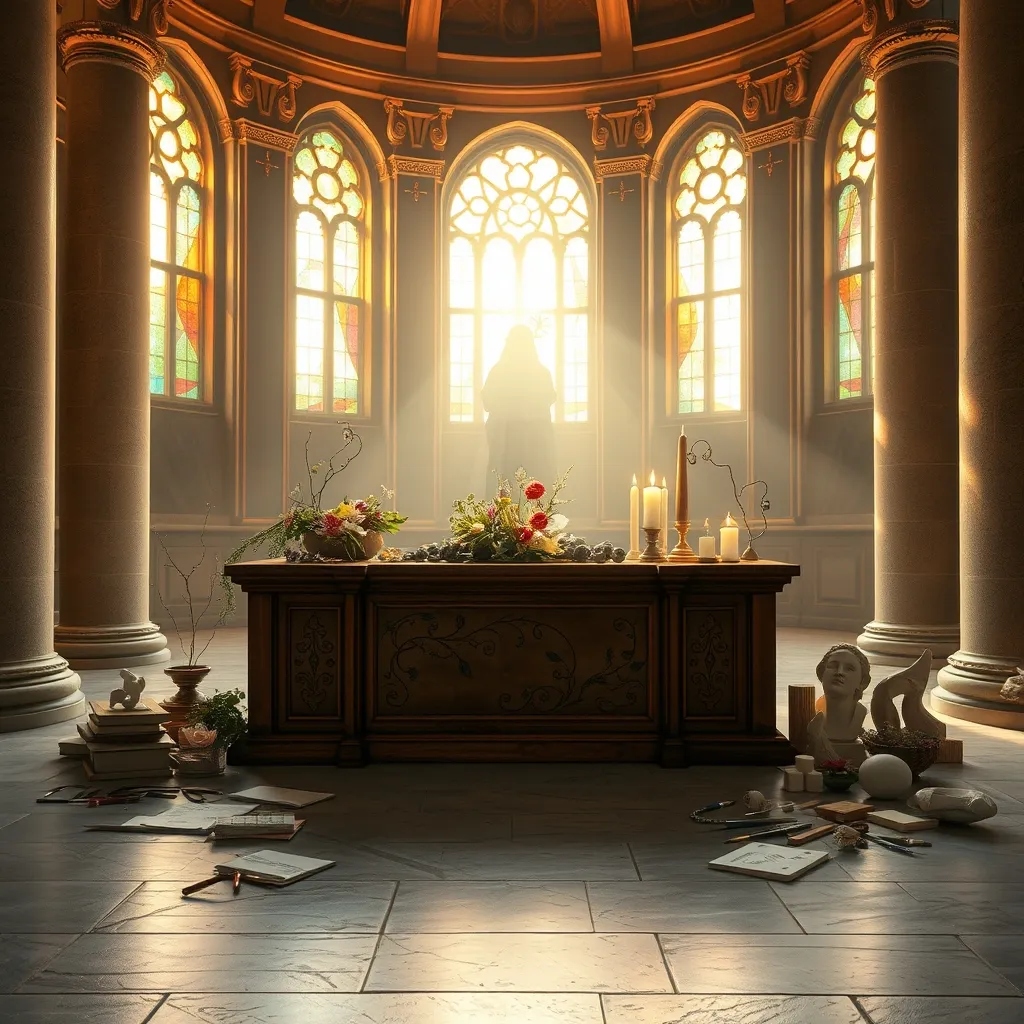
Temples, in many cultures, symbolize a sacred space—an intersection between the mundane and the divine. An altar, specifically, acts as a focal point for offerings, intentions, and connection. When this image appears in a dream, it often reflects the dreamer’s inner sanctum of creativity and inspiration.
Why is this especially potent for artists and creatives?
First, think of the temple altar as a metaphor for the creative process itself. Just as offerings are made on an altar, artists offer their ideas, emotions, and skills to their craft. Dreaming of this symbol may suggest a moment of reflection—an invitation to honor your artistic journey, to acknowledge what you’ve sacrificed or dedicated.
In these dreams, the altar can also represent a place of transformation. Creative individuals often experience the tension of birthing new ideas from chaos or the unknown. The altar stands as a sacred threshold, signaling the dreamer’s readiness to elevate raw inspiration into something meaningful.
Consider the atmosphere they encounter: Is the altar adorned with vibrant colors or minimalistic purity? Are flames flickering on the altar, or is it serene and silent? These details can hint at the state of the artist’s creative energy. A radiant, bustling altar might suggest a surge of productivity and passion. A quiet, empty altar could be a call for introspection or renewal.
Moreover, the temple altar in dreams may embody the artist’s "muse" or spiritual guidance. It’s a reminder that creativity is more than technique—it’s a dialogue with deeper layers of the self. This sacred space urges the dreamer to trust intuition and embrace vulnerability, essential ingredients for authentic artistic expression.
Finally, such dreams can challenge creatives to reconsider what they hold sacred in their practice. What beliefs, habits, or rituals fuel your artistry? What needs cleansing or release? The temple altar invites a ceremonial mindset toward creativity—as something holy, deserving of respect and reverence.
In essence, for the artistic soul, a temple altar dream is an evocative symbol. It asks intriguing questions: How do you honor your creative spirit? What offerings do you bring to your art? How do you transform inspiration into your unique masterpiece?
9. People Experiencing Life Transitions
For people experiencing life transitions, dreaming of a temple altar carries profound significance. These moments in life—whether a career change, moving to a new city, or a major relationship shift—often stir deep emotions and questions about identity and purpose. The temple altar in dreams acts like a sacred stage where these feelings play out.
Why a temple altar? It’s more than just a structure. It symbolizes a place of worship, reflection, and connection to something greater than oneself. For those in flux, this dream image invites them to pause. It suggests a need to honor their inner journey and reflect on their evolving values.
The altar represents a point of focus, a grounding force amid chaos. It might signal that the dreamer is searching for stability or trying to align their choices with a deeper truth. The offerings on the altar—whether flowers, candles, or incense—could symbolize hopes, fears, or even sacrifices related to their transition.
Seeing a temple altar may also encourage the dreamer to embrace spirituality or mindfulness as tools to navigate uncertainty. It whispers a gentle reminder that transformation often calls for sacred rituals—both external and internal. The dream asks: what are you willing to lay down? What will you carry forward?
In essence, for those in life’s upheavals, the temple altar is a powerful beacon. It is a prompt to find sacredness in change, to create pause amidst hustle, and to honor both the past and the yet-to-be. Could this dream be an invitation to craft your own altar—real or symbolic—to mark this chapter with intention?
10. Students of Mythology and Symbolism
For students of mythology and symbolism, dreaming of a temple altar is a rich and layered experience. It invites deep contemplation and sparks curiosity about the ancient rites and spiritual traditions that shaped human cultures.
A temple altar in dreams acts as a bridge. It connects the earthly with the divine. This symbol often carries a strong resonance, evoking images of sacred ceremonies, offerings, and the quest for higher knowledge.
Why does this image capture the imagination of those immersed in mythology? Because a temple altar represents a focal point of transformation. It’s where the mundane meets the mystical. For students obsessed with symbols, it’s a powerful prompt to explore themes of sacrifice, devotion, and connection to the transcendent.
In their dream, students might notice intricate carvings, flickering candles, or incense smoke curling upward. These details are more than decoration. They are rich clues pointing to cultural narratives and spiritual meanings embedded within the altar’s symbolism.
Furthermore, the temple altar can symbolize the inner sanctum—the sacred space within oneself. For mythology students, it may reflect their personal journey of uncovering hidden truths and honoring the divine forces at work within human experience.
Encountering a temple altar in a dream could also be a call to reckon with ancient wisdom or ancestral traditions. It nudges the dreamer to question: What rituals or beliefs are still alive in my psyche? What offerings am I willing to make for my own growth?
In this way, the temple altar is not just an artifact from mythic pasts but a dynamic symbol. It challenges students of mythology and symbolism to look beyond the obvious and engage with the profound layers of ritual, faith, and transformation that it embodies.
11. Followers of New Age and Esoteric Traditions
For followers of New Age and esoteric traditions, dreaming of a temple altar carries profound layers of meaning. This symbol is not just an image but a spiritual beacon inviting deep reflection.
The temple altar, in their dreams, often represents a sacred space within the self. It is where the inner and outer worlds converge. This altar is a site of transformation, a place where one can offer intentions, prayers, or energies to the universe.
Dreaming of this altar frequently signals a call to connect with higher consciousness. It suggests a readiness to engage in personal rituals or spiritual practices. Followers may see it as an invitation to purify their thoughts and align with their soul’s purpose.
In many cases, the altar in the dream is cluttered or glowing. A cluttered altar might indicate blocks in spiritual growth or unresolved emotional issues. A glowing altar, by contrast, symbolizes awakening, enlightenment, and the presence of divine guidance.
The dream can also encourage seekers to explore the power of manifestation. The altar embodies a sacred threshold where desires meet cosmic energy. It emphasizes the importance of intention-setting in their spiritual journey.
For the esoteric-minded, the temple altar might also hint at esoteric knowledge or hidden wisdom awaiting discovery. It’s a reminder to trust intuition and delve deeper into mystical practices, such as meditation, energy healing, or sacred geometry.
Ultimately, the dream altar serves as a message. It nudges the dreamer to honor their spiritual path with devotion. It’s a symbol of sanctuary, balance, and the mysterious alchemy between the mundane and the divine.
12. Mental Health Professionals and Therapists
Consider the temple altar as a sacred space within the psyche. It represents a place of ritual, reflection, and transformation. For those who guide others through emotional labyrinths, the altar in dreams may signal inner sanctuaries, both fragile and powerful.
Why does this symbol surface in their dreams?
First, it could reflect their deep connection to healing rituals — the therapeutic process itself. The altar embodies ceremony, intention, and focus. Just as therapists facilitate a client’s journey toward wholeness, the altar symbolizes that dedicated space where change can ignite.
Second, it might reveal their own need for renewal and grounding. The demanding nature of mental health work often requires pauses for personal reflection. Dreaming of a temple altar may be a subconscious reminder to restore balance, honor one’s own inner rituals, and nurture mental health.
There’s also a subtle question posed by the dream: what are the “offerings” being made? In therapy, offerings might translate to emotional labor, empathy, or vulnerability. The altar’s presence invites therapists to examine what they give—and what they receive in return.
Moreover, a temple altar in a dream may reflect ethical and spiritual dimensions within their work. It prompts reflection on boundaries, sacred trust, and the reverence owed to the client’s inner world.
In short, for mental health professionals, the temple altar is never a passive image. It stirs inquiry.
Is it a call to deepen self-care?
A symbol of the profound sacredness in their role?
Or perhaps a mirror reflecting the intimate intersection of personal and professional healing?
Each dreamer may find a unique answer, yet the temple altar’s enduring power lies in its invitation: to hold space for transformation, both within and beyond the therapeutic setting.
13. Individuals Facing Moral or Ethical Dilemmas
For individuals grappling with moral or ethical dilemmas, dreaming of a temple altar carries a unique and profound significance. The temple altar, a sacred space of ritual and offering, often emerges in dreams as a powerful symbol of conscience and inner judgment.
Why does this image appear at such a charged moment in one’s life?
Think of the temple altar as a crossroads within the dreamer’s psyche. It is a place where conflicting values and beliefs are weighed. In waking life, the person faces tough decisions that tug at their sense of right and wrong. In the dream, the altar becomes a mirror reflecting that internal battle.
The altar stands for sacrifice and devotion—concepts deeply tied to ethical struggles. Dreaming of it may indicate that the individual is being called to offer something up. This could be a part of themselves: a bias, a temptation, or even a prized desire. The altar asks: What are you willing to surrender for your integrity?
Often, the altar is associated with purity and sanctity. For someone wrestling with moral questions, this might signal the need to cleanse their intentions or actions. The dream encourages reflection: Are their choices aligned with their highest values? The sacredness of the altar implies the gravity of the situation—this is not a trivial matter.
Interestingly, the state of the altar in the dream also matters. A well-lit, orderly altar might suggest clarity and readiness to make an ethical decision. Conversely, a chaotic or damaged altar could reveal inner turmoil or confusion about what the right path is.
In essence, the temple altar is an invitation. It urges the dreamer to pause and engage in honest self-examination. It poses a silent question: What offering will you make to your own moral compass?
For those caught in moral or ethical dilemmas, this dream symbol can serve as a powerful guidepost. It compels awareness, courage, and the pursuit of integrity amidst the complexity of choice.
14. History Buffs and Archaeology Enthusiasts
For history buffs and archaeology enthusiasts, dreaming of a temple altar is seldom just a fleeting image. It taps into deep wells of curiosity and reverence for the past.
A temple altar in a dream might immediately evoke visions of ancient rituals and sacred ceremonies. For these dreamers, it can symbolize a direct connection to civilizations long gone. It’s as if the dream beckons them to explore foundations—not just physical, but spiritual and cultural.
This symbol invites questions: What stories were told at this altar? Which deities or ancestors were honored there? What secrets did those rituals hold? These questions fuel the imagination, blending the thrill of discovery with a profound respect for historical mystery.
Moreover, the temple altar can embody a search for meaning beyond the textbook facts. It represents a sacred threshold—where history is not just studied but felt. The dreamer becomes part of a lineage, standing in the same spiritual space as those who once knelt before that altar.
In some cases, the altar might hint at unresolved curiosities or a desire to uncover forgotten truths. It might encourage digging deeper—literally and metaphorically—into archaeological layers that reveal human stories etched in stone and ceremony.
For these dreamers, the symbol is also a call to preserve heritage. It underscores the altar’s role as a centerpiece of cultural identity, reminding them why history matters as a lived experience, not just a subject in books.
So, a temple altar isn’t merely an ancient relic in their dreams—it’s a beacon. It invites history buffs and archaeology enthusiasts to honor the past, question the present, and envision what mysteries still lie buried beneath the sands of time.
15. People with Ancestral or Heritage Connections
For people with ancestral or heritage connections, dreaming of a temple altar often carries profound significance. It’s not just a symbol. It’s a bridge that links the present to the past.
Imagine standing before an altar. It’s ancient, weathered by time. The stones might hold stories handed down through generations. For those with deep-rooted heritage, this altar isn’t just a physical structure—it’s a sacred space where their ancestors reside in memory and spirit.
The altar in dreams can evoke a powerful sense of belonging. It calls attention to lineage, traditions, and inherited values. Dreamers may feel a stirring to honor those who came before them. There’s an unspoken dialogue—between the self and the ancestral spirits—that awakens in such dreams.
Questions often bubble up. What sacrifices did my ancestors make? Are their teachings being preserved? The altar becomes a spotlight on heritage, urging dreamers to reflect on their identity within a larger historical context.
Sometimes, these dreams hint at unresolved issues—a passed-down trauma or a forgotten promise. The temple altar may act as a symbol for reconciliation. It invites the dreamer to seek healing, to restore broken family ties, or to rekindle ritual practices lost over time.
In this way, the dream altar becomes a personal and collective emblem. It’s a call to reconnect and honor an unbroken chain of legacy. For those tied to their heritage, such dreams can be deeply moving, filled with reverence and a yearning to understand their place in the world.
Back to interpretation of temple altar